
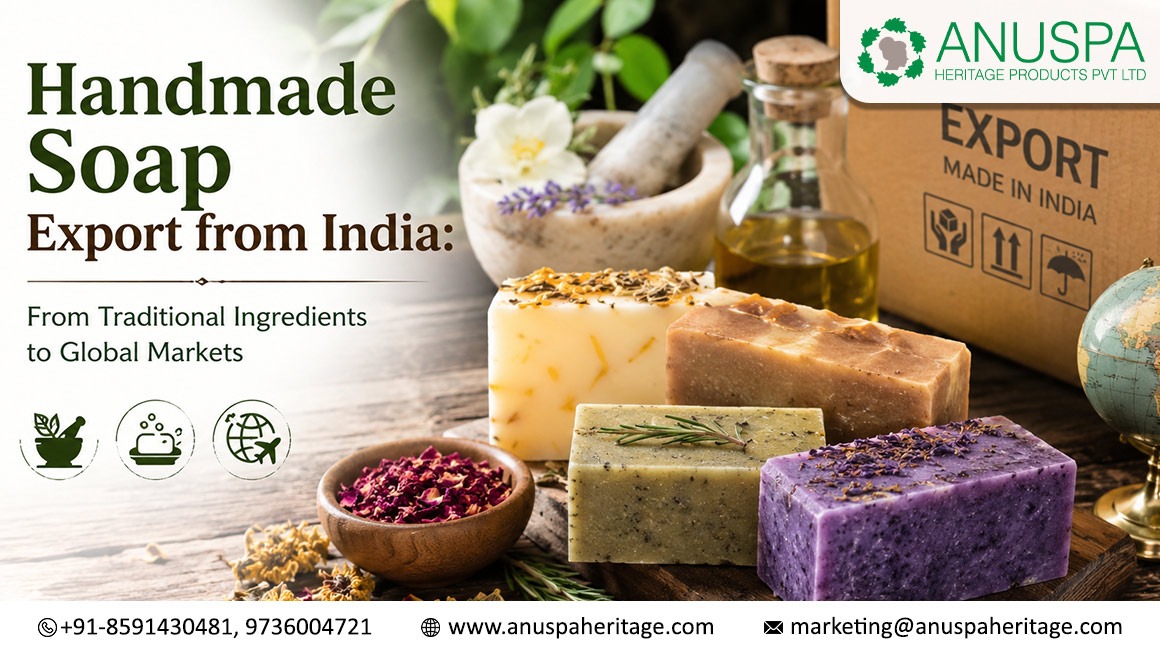
Handmade Soap Export from India: From Traditional Ingredients to Global Markets
There will be a huge transformation in the global skin care market from chemical, organic to natural and artisanal body care products. Handmade soap export from India has been gaining traction worldwide thanks to the country’s long history of herbal treatments and soap making skills. This blog will delve into the reasons behind Indian natural soaps’ popularity in the global market, their distinct composition and influence of contemporary manufacturing techniques in meeting global demand.
The Growing Demand for Indian Handmade Soaps
Handmade soaps are vastly different from the commercial detergent bars that can be purchased in bulk. The handmade process retains the naturally occurring glycerin, creating a richly moisturizing bathing bar – which leaves the skin clean without harming its lipid barrier.
India has a very rich history in soaps, which makes use of ancient herbal knowledge and processes like cold process and hot process. Today’s manufacturers make all kinds of bars, from those with pH levels as low as 5.5 (skin-friendly) to transparent glycerin blocks to specialty herbal bars.
Traditional Botanical Ingredients Dominating Global Markets
Indian soaps are so popular worldwide because they are made from natural and reliable ingredients. The exporters create products with rich botanical oils, essential oils and herbal extracts which provide visible benefits to skin.
• Herbal & Ayurvedic Extracts: Some of the ingredients are renowned throughout the world for their antibacterial and skin-soothing properties such as Neem, Tulsi, Turmeric, Centella Asiatica (Gotu Kola), and Aloe Vera.
• Nourishing Oils & Butters: Pure coconut oil, sesame oil, castor oil, shea butter and kokum butter will give rich lather, deep hydration and structural stability.
• Natural Exfoliants and Clays: Multani Mitti, Red Clay, Crushed Walnut Shells and Dry Botanical Petals provide physical exfoliation without the microplastics.
• Pure Essential Oils: Sandalwood, jasmine, lemongrass and lavender essential oils take the place of synthetic fragrances for true aromatherapy benefits.
Manufacturing Capabilities and Packaging Innovations
Handmade soap export from India have matured beyond the small cottage units and are now sophisticated private label partners who can provide bespoke craftsmanship and scale in order to maintain high volumes of exports.
Flexible Contract Manufacturing
Private-label services are often used by international brands to create customized product lines. Indian manufacturing plants provide:
- Different Soap Bases: From traditional soap noodles to transparent soap blocks made from glycerin to transparent soap bars and to 5.5 pH soap bars and water-free shampoo bars.
- Custom Formulations: Over 1,000 combinations of colors, essential oils and therapeutic actives can be customized.
- Batches of any size: Bottleneck production systems for varied order quantity ranging from boutique batches to large commercial consignment.
Sustainable & Eco-Friendly Packaging
Environmental sustainability is a top priority for global consumers and they also care about clean ingredients. Indian exporters fill this demand by adopting innovative methods of packaging:
- Plastic Free Wrapping: Using recycled paper wrapping, tuck in boxes, paper cartoning and the biodegradable wraps.
- Protective Formats: Providing shrink wrapping, flow wrapping and over-wrapping to guarantee the integrity of the product on international sea transport.
Final Thoughts
Sustainable, plant-based bathing bars are on the rise and the international market for natural skin care continues to grow at an astounding pace. Indian suppliers combine traditional herbal ingredients with contemporary, environmentally friendly production methods to produce high-quality personal care products. As one of the leading players in this sector, Anuspa Heritage provides complete contract manufacturing and private label services to global brands to help them leverage handmade soap export from India by offering them better quality and reliability.
FAQs
Do Indian soap exporters offer plastic-free and eco-friendly packaging formats?
Yes, we wrap in paper, cardboard cartoning and plastic-free sustainable formats.
Are synthetic chemicals like parabens avoided in natural handmade soaps?
Yes, natural soaps really do remove parabens, sulfates and other harsh cleansers found in artificial, man-made soaps.
How long is the typical shelf life of natural handmade soaps?
Properly formulated natural soaps generally maintain peak quality for twenty-four months.
Can custom fragrances and essential oils be added to exported soaps?
Yes, manufacturers do create scents that are unique, either from pure essential oils or extracts from natural materials.

Recent Comments